
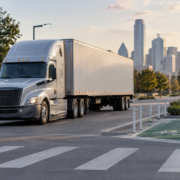
How Can Scene Details Help a Dallas Truck Pedestrian Claim?
A pedestrian or cyclist can be difficult for a truck driver to see, especially near an intersection where a large vehicle is turning. If a commercial truck hits someone walking or riding a bicycle, a Dallas truck pedestrian accident claim may depend on details such as the truck’s path, the driver’s actions, traffic signals, and what witnesses observed. A collision does not automatically establish who was legally responsible; the available evidence and Texas law matter. Husain Law helps explain the issues that may arise in truck collision claims, including situations involving people outside a vehicle. This article discusses how liability may be assessed, why truck size and visibility matter, and which medical and documentation steps may help preserve information after a crash in Dallas, Texas. The discussion is general: each incident has its own facts.
Could a truck driver be liable in a Dallas pedestrian or bicycle accident?
A truck driver may be liable if evidence shows that the driver failed to use reasonable care and that failure contributed to the collision and resulting harm. For example, investigators may examine whether a driver was attentive, adjusted speed to conditions, checked the truck’s surroundings before turning, or responded appropriately to a person in the roadway. The answer is not automatic simply because a truck struck a pedestrian or cyclist. The full circumstances—including traffic controls, visibility, and the actions of everyone involved—can matter.
A pedestrian’s or cyclist’s conduct may also be considered. Questions might include whether the person was crossing at an intersection, following a signal, riding near a travel lane, or visible to the driver. Texas comparative-fault rules in truck accident claims may affect a claim when the parties dispute how their actions contributed; a disagreement about right-of-way alone does not resolve responsibility. The evidence and applicable law must be considered together.
The driver is not always the only potential responsible party. Depending on the evidence and the relationship between the driver and carrier, investigators may examine potential claims against a Dallas trucking company or other businesses. Company responsibility is fact-specific and should not be assumed merely because a vehicle was being used for work.
How can turning paths, blind spots, and stopping distance affect a claim?
A commercial truck’s size can affect what its driver can see and how it moves through a crowded street. A truck’s mirrors may not show every area beside or immediately in front of the vehicle. A turn can also involve a wide path, while the trailer may track differently from the cab. These features can be relevant when assessing whether a pedestrian or cyclist was visible and whether the driver took reasonable care before moving.
Stopping distance is another consideration. A truck’s ability to stop may depend on speed, load, road conditions, braking, and the distance available to react. Investigators may compare physical evidence and witness accounts with the truck’s movements. They may also consider the point of impact, nearby vehicles, sightlines, and traffic signals. Details like these can help explain how investigators reconstruct Dallas wide-turn truck crashes.
Right-of-way is not always a simple question in an urban collision. Crosswalk markings, signals, turning traffic, and the actions of people approaching an intersection may all be relevant. In Dallas, the scene could be a busy commercial corridor or a neighborhood street, and conditions differ from one location to another. Electronic truck data that may explain speed and braking can sometimes supplement photographs and witness observations, but whether such data exists or is useful depends on the vehicle and facts.
What should you document after a truck hits a pedestrian or cyclist?
Medical attention and safety come first. If someone may be injured, emergency services can assess the immediate situation. Even when an injury seems minor at first, a qualified medical professional can evaluate it. Keep records of appointments, care, and related communications if available. A Dallas semi-truck crash response checklist may help with broader post-collision considerations, but a person’s needs and circumstances vary.
When it is safe and practical, preserving scene details may help clarify what happened. Consider noting or photographing:
- The intersection, crossing, lane position, traffic signals, lighting, weather, and visible road conditions.
- The truck’s direction of travel, turning path, color, company markings, and any partial identifying details.
- Bicycle damage, personal belongings, visible vehicle damage, and the location of any debris.
- Names and contact information for witnesses, along with what they personally observed.
Nearby businesses, homes, parking facilities, or transit locations may have cameras that captured the roadway. Identify potential cameras and where they point; footage may not be kept indefinitely. For additional context on partial identifying details, witnesses, and video, see ways to identify a truck after a Dallas hit-and-run. Avoid putting yourself in danger or interfering with responders while documenting anything. For additional context on this issue, see Which Clues Help a Dallas Hit-and-Run Truck Lawyer?.
Report the collision to the appropriate authorities when circumstances call for it, and keep any report or reference information you receive. A report can be useful, but it does not necessarily answer every liability question. Photographs and witness recollections can also become harder to obtain as time passes. Dallas pedestrian accident lawyers may offer guidance specific to a pedestrian collision involving a commercial vehicle.
Frequently Asked Questions
What if the truck driver says the pedestrian or cyclist caused the crash?
A driver’s account is one piece of information, not a final legal determination. Witness statements, photographs, traffic controls, vehicle data, and physical evidence may help clarify what happened. Texas comparative-fault rules can affect a claim when responsibility is disputed, but the result depends on the evidence and applicable law. An attorney can assess how those issues may apply to an individual situation.
What if the truck left before I could get its identifying details?
Other information may still help identify a vehicle, including its color, type, company markings, direction of travel, partial plate details, witness observations, or nearby camera footage. Record what is remembered as accurately as possible, without guessing. The availability of witnesses or video may change over time, and not every camera captures a useful view.
Does a police report decide who is legally responsible?
A crash report can preserve information collected by responding officers, but it is not necessarily a complete investigation or a court’s final decision about liability. A claim may involve additional evidence, such as video, witness accounts, vehicle data, and expert analysis. The report’s contents and significance depend on the circumstances and any later investigation.
Can a cyclist seek compensation for bicycle damage as well as injuries?
A claim may include property damage, such as damage to a bicycle, along with other losses that are supported by evidence and allowed under applicable law. Photographs, repair estimates, purchase information, and other records may help document the bicycle’s condition and value. The types of recoverable losses depend on the facts, proof, and legal rules that apply.
How Husain Law Can Help
Husain Law is dedicated to helping injured pedestrians and cyclists understand the questions that may arise after a collision with a commercial truck. The firm can review the available information, explain how evidence concerning visibility, turning movements, right-of-way, and potential company involvement may matter, and discuss options based on the facts. No two collisions are identical, and no particular outcome can be promised. If you have questions about a truck collision in Dallas, contact Husain Law to request a free consultation or case evaluation.
The information in this article is for educational purposes only and does not constitute legal advice. Contact a qualified attorney licensed in Texas for advice specific to your situation; laws vary by location and may have changed since publication.