

What Comes First After a Semi-Truck Crash in Dallas?
A semi-truck collision can leave you shaken, disoriented, and unsure what to do next. If you are asking what to do after a truck accident in Dallas, the immediate priorities are safety, medical attention, accurate documentation, and preserving information before vehicles and physical evidence disappear. A calm, organized response can make the first week easier to manage.
After moving to a safe location, consider contacting Dallas truck accident lawyers for guidance about evidence preservation and early insurer communications. Husain Law can help explain the process and evaluate whether legal representation fits your circumstances. This article provides a scene-to-first-week checklist covering medical care, photographs, witnesses, police reports, insurance calls, and damaged property.
What Should You Do After a Truck Accident in Dallas at the Scene?
Your first responsibility is personal safety. If anyone faces an immediate medical emergency, contacting 911 may be appropriate. When it is reasonably safe, move away from traffic and spilled cargo, use hazard lights, and avoid standing near unstable vehicles or a damaged trailer. Do not attempt to inspect a truck, climb into a vehicle, or retrieve items from an unsafe roadway.
Get medical attention and report the collision
A medical evaluation can identify injuries that are not obvious immediately after a crash. Even if symptoms appear mild, documenting what happened and following appropriate medical guidance may help create a clear health record. Do not diagnose yourself or assume that a lack of immediate pain means there is no injury.
Reporting a commercial truck accident to law enforcement is also important. In Dallas, Texas, officers may investigate the scene, identify involved parties, and prepare a crash report. Give a factual account, provide identifying information, and avoid guessing about speed, fault, or the extent of your injuries. Ask how to obtain the report or record the incident number if one is provided.
Document only when it is safe
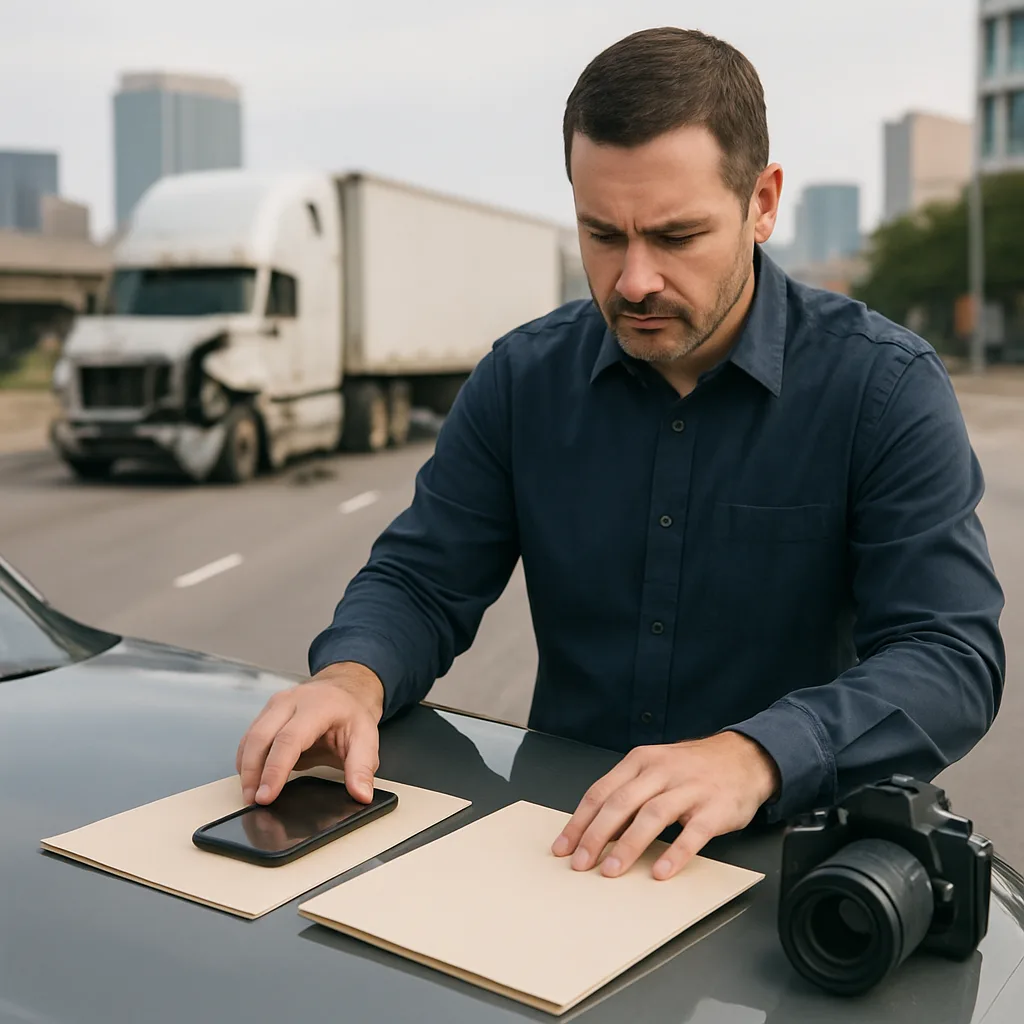
If your condition and the scene permit, take photographs or video from a safe position. Consider capturing:
- The vehicles from multiple angles, including damage and their positions
- The truck, trailer, license plate, company markings, and visible identification numbers
- Road conditions, lane markings, traffic controls, lighting, weather, and debris
- Skid marks, spilled materials, damaged barriers, and cargo or tie-down conditions
How Can You Preserve Truck Crash Evidence During the First Week?
Commercial collisions may involve more records than an ordinary vehicle crash. Before leaving, exchange contact and insurance information with the driver and collect the carrier or employer name shown on the truck or trailer. If you can do so safely, photograph the tractor, trailer, visible company information, and any cargo involved. These details may later help identify claims involving the trucking company, carrier, broker, shipper, or maintenance provider rather than focusing only on the driver.
A vehicle’s electronic control module, telematics system, dispatch records, and related data may also matter. Such information can potentially address braking, speed, driver hours, or vehicle activity, but crash victims generally cannot obtain or preserve it themselves. Counsel may evaluate whether a preservation request or other step is appropriate. See this overview of electronic truck crash records for background.
Preserve physical property and witness information
Do not throw away damaged clothing, a helmet, child safety seat, phone, bicycle, or other property before it is photographed and its condition is recorded. Store items in a dry, secure place when practical. Keep original photographs and videos, and avoid editing them. Write down what you remember while details are fresh, including the direction of travel, sequence of events, sounds, and visible conditions.
Ask witnesses for their names and reliable contact information. Do not pressure anyone to characterize fault; simply record what they observed. Save dash-camera footage, nearby business-camera information, and relevant messages. Photographs of spilled or shifted cargo may provide useful cargo-loading evidence in a truck crash, particularly in a rollover, jackknife, sudden lane movement, or lost-load event.
What Should You Do About Reports, Insurers, and Follow-Up?
During the first week, organize the information gathered at the scene and create a basic claim file. Keep the crash report, medical records, discharge instructions, prescriptions, repair estimates, wage documentation, photographs, witness details, and every letter, email, or text related to the collision. In Dallas County and elsewhere in Texas, procedures and deadlines can vary depending on the parties and facts, so an early review may be useful.
Communicate carefully with insurance companies
You may need to notify your own insurer under the terms of your policy. You can provide basic identifying facts and cooperate with reasonable claim administration, but avoid speculating about fault or minimizing symptoms. Before giving a recorded statement, signing a broad release, or accepting a settlement, many people choose to seek legal guidance so they understand what the request could affect.
Do not assume the first insurer that contacts you represents every available policy. A commercial crash may involve primary, excess, cargo, or other additional commercial truck insurance coverage. Keep a log of calls and request written confirmation of important communications.
Use a first-week checklist
- Confirm appropriate medical follow-up and keep records of symptoms and appointments.
- Request or track the law-enforcement crash report.
- Back up photographs, videos, dash-camera files, and witness information.
- Preserve damaged personal property and avoid repairs or disposal before documentation when feasible.
- Notify relevant insurers, but do not guess about disputed facts.
- Calendar important legal deadlines and seek advice about Texas truck accident filing deadlines.
The first week is not a deadline for every decision. It is a practical period for preserving information, obtaining care, and learning which issues may require professional review.
Frequently Asked Questions
Should I move my vehicle after a semi-truck crash in Dallas?
If remaining in place creates a traffic or safety hazard, moving to a safer location may be appropriate when you can do so without worsening an injury or creating another danger. If the vehicle cannot be moved, stay away from traffic and wait for emergency personnel when possible. If safe, photograph the original positions, damage, debris, and road conditions before vehicles are moved.
What if I did not take photographs at the Dallas crash scene?
You can still preserve other evidence. Save dash-camera footage, identify witnesses, request the police report, photograph visible injuries and vehicle damage as soon as reasonably possible, and keep damaged property. Nearby businesses or public systems may have video-retention limits, so prompt legal review may help determine whether preservation requests are appropriate. Missing photographs do not by themselves resolve who may be responsible.
Should I speak with the trucking company’s insurer?
You may receive a call from an insurer or claims representative soon after the collision. Consider confirming basic information without guessing about fault or making broad statements about your condition. Before a recorded interview, written statement, release, or settlement discussion, a licensed attorney can explain potential implications under Texas law. Keep copies of communications and note the date, speaker, and subject of each call.
Can I repair or replace damaged property after the crash?
Necessary repairs and replacements may be unavoidable, especially when transportation or safety is affected. Before altering or discarding property, photograph it from several angles, preserve invoices and estimates, and ask whether an inspection is needed. This may include a vehicle, clothing, protective equipment, electronics, or cargo-related items. The appropriate step depends on the item, insurance requirements, and the circumstances of the Dallas collision.
How Husain Law Can Help
Husain Law is dedicated to helping people understand the practical issues that arise after a semi-truck collision. The firm can evaluate available documentation, discuss medical and property records, review early insurer communications, and consider whether additional evidence—such as commercial records or electronic data—may be important. Depending on the circumstances, a truck accident lawyer in Dallas may also help coordinate communications and explain potential legal options under Texas law.
If you or a family member has been involved in a commercial truck crash, contact Husain Law for a free consultation or case evaluation. The firm is committed to fighting for your rights while providing information tailored to the facts you share.
The information in this article is for educational purposes only and does not constitute legal advice. Contact a qualified attorney licensed in Dallas, Texas for advice specific to your situation.

