
Where Can a Dallas Lawyer Find Proof of Truck Brake Failure?
A brake-related truck collision can leave an injured motorist with more questions than answers. Did the driver fail to react, or did a worn component, missed inspection, or inadequate repair make it impossible to stop safely? A Dallas truck accident lawyer can help investigate those questions while preserving evidence that may disappear when a vehicle is repaired or returned to service.
Could a truck brake failure support a Dallas accident claim? Potentially, but the answer depends on proof. Husain Law approaches these cases by examining the damaged vehicles, inspection and maintenance history, witness accounts, electronic data, and available insurance. This guide explains what injured Dallas motorists can photograph, request, and preserve; who may be responsible; and how investigators separate mechanical failure from driver error or a defective part.
How Can Brake Failure Support a Dallas Truck Accident Claim?
A brake problem does not automatically establish liability. A claim generally requires evidence that a responsible person or company failed to use reasonable care and that the failure contributed to the collision and resulting injuries. In Dallas, Texas, that investigation may involve the driver, motor carrier, maintenance contractor, parts manufacturer, or more than one party.
Potential mechanical causes
Investigators may examine whether the truck had worn brake shoes or pads, damaged drums or rotors, leaking air lines, faulty valves, improperly adjusted brakes, or another component problem. For commercial vehicles, stopping performance can also be affected by loading, road conditions, speed, and the condition of connected braking systems. A qualified mechanic or accident-reconstruction professional may be needed to evaluate the parts and vehicle data.
Why the damaged vehicle matters
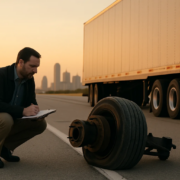
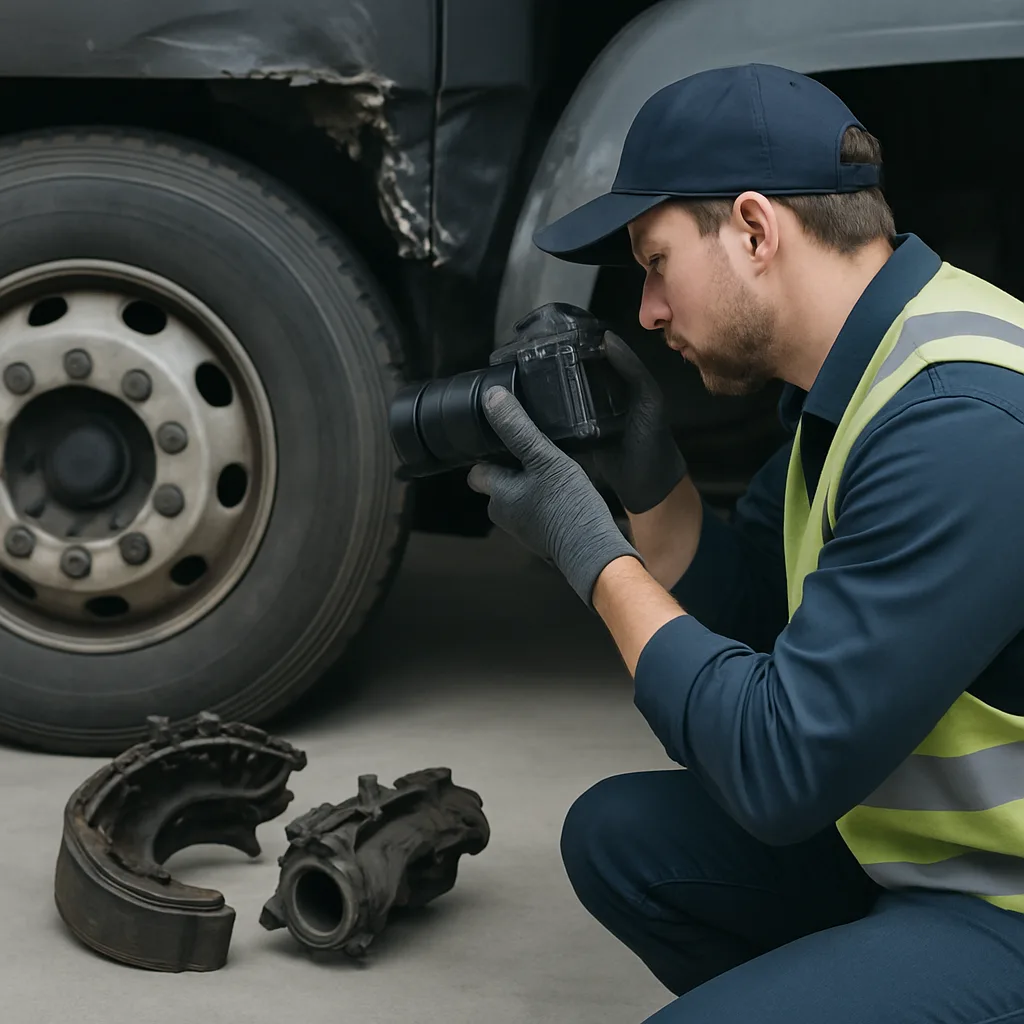
Photographs should show the overall crash scene, vehicle positions, tire marks, debris, roadway conditions, and close views of visible damage. If safe and possible, photographs of the truck’s wheels, brake areas, trailer, and underride or impact points may help document conditions before repairs or parts replacement. Do not place yourself in danger or interfere with an official investigation.
The damaged vehicle and removed components may be important physical evidence. Before authorizing repairs, an attorney may advise arranging an inspection and asking the owner, carrier, insurer, or repair facility to preserve relevant parts. Guidance on what to do after a semi-truck crash in Dallas can help organize immediate evidence-preservation steps.
What Evidence Reveals Who May Be Responsible for Truck Brake Failure?
A semi truck brake failure accident often requires more than a police report or an insurance statement. The central question is not simply whether the brakes failed, but why. Investigators may compare the physical condition of the braking system with inspection records, repair invoices, driver statements, roadway evidence, and electronic data.
Useful evidence may include:
- Commercial truck inspection records, daily inspection reports, and out-of-service findings;
- Maintenance schedules, work orders, invoices, and communications about reported defects;
- Photographs and measurements of brake components, tires, wheels, and air systems;
- Statements and contact information for eyewitnesses, first responders, and repair personnel;
- Event-data or electronic control-module information showing speed, braking activity, and timing;
- Cargo and loading information that may bear on stopping performance; and
- The truck’s ownership, leasing, employment, and insurance documents.
Separating driver error from maintenance negligence
Electronic data may help show whether the driver applied the brakes, when braking began, and how the vehicle responded. Dallas truck black box evidence should be preserved promptly because access, retention, and interpretation can vary by vehicle and system. Data does not answer every question by itself; it should be compared with skid marks, damage patterns, inspection findings, and witness accounts.
Identifying possible defendants
A driver may be responsible if conduct such as excessive speed, following too closely, or failing to respond appropriately contributed to the crash. Separately, a carrier may face allegations of trucking company maintenance negligence if it ignored known defects, failed to follow a reasonable inspection program, or returned an unsafe vehicle to service. A repair business or component manufacturer may also warrant investigation when faulty work or a defective part is supported by the evidence. These issues are fact-specific, and responsibility may be shared.
Readers can review information about truck crash claims against the trucking company when evaluating how employer and carrier conduct may fit into a broader claim.
What Should Dallas Motorists Preserve After a Suspected Brake Failure?
The first priority after a collision is safety and appropriate medical attention. Once immediate hazards are addressed, practical documentation can protect information that may later be difficult to recreate. In Dallas, Texas, an insurer’s early investigation may not include every physical component or maintenance record relevant to a mechanical-failure claim.
A motorist or family member may consider preserving the following, depending on the circumstances:
- Scene and vehicle photographs: Save original images showing the roadway, truck, passenger vehicle, visible damage, debris, tire marks, warning lights, and weather or lighting conditions. Keep copies in more than one secure location.
- Witness information: Record names and contact details, if available, and write down what each person appeared to observe without pressuring anyone to adopt a particular version of events.
- Records and communications: Keep the crash report, towing information, repair estimates, medical records, insurer letters, and messages relating to the collision. Ask whether the truck, components, inspection files, and electronic data will be preserved.
- Personal observations: Write a dated account of what happened, including sounds, braking behavior, traffic conditions, and statements made at the scene. Avoid guessing about the cause.
A truck mechanical failure claim in Texas may also involve questions about damages beyond immediate invoices. Medical documentation may be relevant to treatment already received, rehabilitation, anticipated care, and other losses. Information about future medical expenses in Dallas truck claims explains why a complete damages review may require more than collecting current bills.
Prompt investigation matters because vehicles may be repaired, components discarded, witnesses may become harder to locate, and electronic records may not remain available indefinitely. The applicable Texas filing deadline can depend on the injury, defendant, governmental involvement, and other facts. Readers should not assume an insurance investigation pauses the Dallas truck accident filing deadline.
Insurance analysis is another part of the process. A carrier’s first policy disclosure may not identify every potentially relevant policy, excess layer, or additional insured. Depending on the facts, counsel may investigate multiple sources of Dallas truck crash coverage before evaluating any settlement proposal.
Frequently Asked Questions
Can a truck company be responsible if the driver did not know the brakes were defective?
Possibly, depending on the evidence and applicable Texas law. A carrier’s responsibility may turn on inspection practices, maintenance records, notice of a defect, repair decisions, and whether the vehicle was reasonably safe to operate. The driver’s lack of knowledge does not by itself resolve those questions. Investigators generally review company records, component evidence, and witness accounts before assessing potential responsibility.
Should I keep the damaged car before an insurance inspection?
The vehicle may contain evidence relevant to impact forces, braking, and the sequence of events. It is generally wise to document its condition and avoid unnecessary repairs or disposal until the preservation issue has been addressed. At the same time, safety and transportation needs matter. An attorney can explain how to arrange an inspection while accounting for storage, towing, and repair concerns in a particular case.
What if the truck’s brake part was replaced after the crash?
Replacement does not necessarily end the investigation. Repair invoices, photographs, removed components, inspection reports, maintenance software, and testimony from mechanics may still provide useful information. Prompt written preservation requests and an independent inspection may help identify what happened to the original part. The strength of the evidence will depend on what was documented and whether the replacement was necessary, authorized, and recorded.
Can I still have a claim if I may have contributed to the collision?
A possible contribution by the injured motorist does not automatically answer whether a claim exists. Texas applies rules concerning proportionate responsibility, and the effect of any assigned percentage depends on the facts and applicable law. Speed, following distance, visibility, warnings, and the truck’s braking condition may all be relevant. A licensed Texas attorney can evaluate how the evidence may affect a particular claim.
How Husain Law Can Help
Husain Law is dedicated to helping injured Dallas motorists understand the evidence behind a suspected truck brake failure. The firm can review photographs, vehicle damage, inspection information, maintenance records, witness accounts, electronic data, insurance issues, and documented losses while working to identify the parties and facts that require further investigation.
The team is committed to fighting for clients’ rights and is ready to evaluate whether a collision may involve driver conduct, carrier maintenance decisions, a repair issue, or a defective component. Contact Husain Law for a free consultation or case evaluation to discuss your situation and legal options.
The information in this article is for educational purposes only and does not constitute legal advice. Contact a qualified attorney licensed in Dallas, Texas for advice specific to your situation.