
When Might Dallas Truck Dashcam Footage Be Deleted?
A collision with a commercial truck can leave you with important questions after the scene clears. If you are looking for truck dashcam footage after an accident in Dallas, one practical concern is how long a company may keep it. There is no single retention period that applies to every truck or camera. Some systems record on a loop, some save selected events, and others may send video to a separate storage system. The footage may not exist, may not have captured the crash, or may be difficult to locate.
Husain Law helps people understand the evidence issues that can arise in semi-truck claims. This article explains why video can be time-sensitive, what truck and carrier details may help identify who controls it, and why a prompt preservation request may matter. It also distinguishes camera footage from other electronic records, which may be stored separately.
How long might Dallas truck dashcam footage remain available?
There is no universal timetable for how long a trucking company keeps camera footage after a crash in Dallas, Texas. Retention may depend on the camera system, its settings, the carrier’s practices, whether an event triggered a save, and whether anyone took steps to preserve the recording. A camera may record continuously and overwrite older video as storage fills. Another system may save a short clip after a detected impact or hard stop, while a cloud-connected system may retain selected files under different rules.
Even when a truck has cameras, the recording may not show the collision clearly. A lens could face the road, the cab, or the truck itself; the view might be blocked, the camera might not be operating, or the relevant moment might fall outside the saved clip. A truck may have more than one camera, and recordings from different views can be handled separately.
Why video may be overwritten or retained differently
Loop recording can replace older footage unless a system flags or saves it. Some clips may be retained as part of a safety review, insurance investigation, or company process, while other footage may not be kept. Those possibilities are not proof that a particular carrier has video or that it has been deleted. A specific retention period should not be assumed without information about the system and its records.
A preservation request can put the carrier or another party on notice that relevant material may matter to a claim. Whether a request is appropriate, who should receive it, and what it should cover depend on the circumstances. An attorney can assess those questions and help distinguish a request to preserve evidence from a guarantee that footage exists or will be produced.
What truck and carrier details can help locate video?
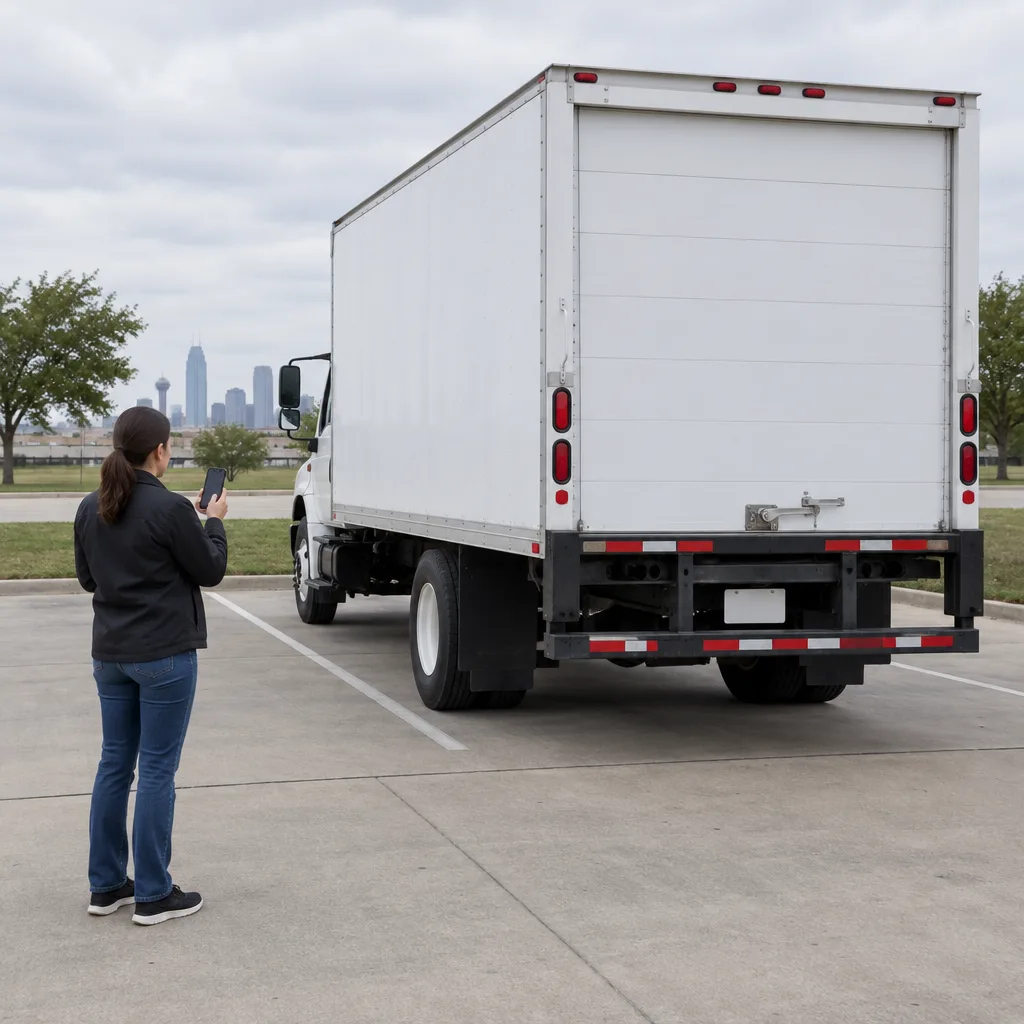
A prompt, accurate record of the truck can help identify the vehicle and the businesses that may have information about it. When it is safe to do so, useful details may include:
- The tractor and trailer descriptions, including color, make, or distinctive features.
- Any visible company name, logo description, unit number, or other fleet marking.
- The license plate state and as much of the plate number as can be safely recorded.
- The crash date, approximate time, location, direction of travel, and nearby landmarks.
- The driver’s name or contact details, if voluntarily provided, and the carrier or business name shown on paperwork or the vehicle.
- Names and contact information for witnesses who may have seen the truck or its markings.
Do not put yourself in danger to collect details or approach a truck. Safety and medical needs come first. Broader guidance on the first steps after a Dallas semi-truck crash may help explain other scene information people commonly document.
Who may control the camera files?
The driver may not be the only person with access to a recording. Depending on the arrangement, the carrier, vehicle owner, fleet operator, camera provider, or another business may store or manage video. A driver’s employer and the truck’s owner may be different entities, so recording the company name and vehicle identifiers can help clarify where an inquiry or preservation request may need to go. For more on the potential responsibility of the trucking company, see the related overview.
In Dallas, a crash on a busy roadway may also be witnessed by nearby drivers or captured by cameras at businesses or other locations. Those recordings have their own owners and retention practices; their existence and availability cannot be presumed. Keeping a precise time and location can make it easier to describe what information is being sought.
Why prompt preservation can matter—and what it cannot promise
Video can be useful because it may show a sequence of events, road conditions, vehicle movement, or activity inside a cab. But a recording is only one possible source of evidence. It may be incomplete, unclear, unavailable, or inconsistent with other information. A preservation request does not establish that a camera recorded the crash, require a particular system to have been installed, or guarantee that footage will be produced.
If someone is considering how to preserve truck video after an accident in Texas, the request’s timing and scope may matter. A lawyer may identify relevant views, time ranges, vehicles, and associated records, and may communicate with parties who could have custody or control. The facts of a claim and applicable procedures can affect what steps are appropriate. In a Dallas matter, an attorney can also consider how any evidence issue fits into the broader claim and the relevant Texas legal process.
It is also important not to treat video as interchangeable with other electronic data. A truck may have event data that records certain vehicle actions, but that is not the same as road-facing, truck-facing, or cab-facing footage. The systems may have different custodians and preservation methods. See how electronic black-box records from a Dallas truck differ from camera recordings.
If the truck leaves before you get its details
A partial plate, a carrier name, a trailer description, witness observations, or the direction the truck traveled may still help narrow down its identity. Nearby businesses or other drivers may have relevant observations, but their recordings are not guaranteed to exist or remain available. In a hit-and-run, these clues that can help identify a truck after a hit-and-run may provide useful context for locating the vehicle or carrier.
A clear record of what you personally observed is more useful than guessing at missing details. If a detail is uncertain, note that it is an estimate rather than presenting it as fact. This can help an attorney evaluate possible sources of evidence without overstating what the available information shows.
Frequently Asked Questions
Is there a standard number of days that trucking companies keep dashcam footage?
No single number of days applies to every trucking company or camera system. Some equipment may overwrite older recordings on a loop, while selected clips may be retained longer under a company or provider process. Actual practices depend on the system and circumstances. Without information about the truck and its camera setup, a specific retention period cannot reliably be stated.
Does every semi-truck have a camera that records a crash?
No. Equipment varies, and a truck may have no camera or may have cameras with different views and functions. A camera can also be inactive, obstructed, or not save the relevant moment. Even when a truck has a camera, the presence of equipment alone does not establish that usable footage of a collision exists.
Can a dashcam recording include audio?
Some systems may record audio and others may not; features depend on the equipment and its configuration. The camera’s location and settings can also affect what a recording captures. Whether audio is available or relevant in a particular claim depends on the facts and applicable law, so it should not be assumed from the presence of a camera.
What if a trucking company says it has no video?
A statement that no video is available does not, by itself, explain whether the truck had a camera, whether it was operating, or whether a recording was retained. The answer may require context about the system, the relevant time period, and who handled its files. An attorney can evaluate what follow-up, if any, is appropriate based on the circumstances.
How Husain Law Can Help
Husain Law is dedicated to helping people understand the evidence questions that can arise after a Dallas truck crash. The firm can evaluate what is known about the truck, carrier, camera systems, and other potentially relevant records, and explain options for addressing preservation concerns. Each situation is different, and no attorney can promise that footage exists or predict what it may show.
If you have questions about a commercial truck camera footage claim, contact Husain Law to discuss your circumstances and request a free consultation or case evaluation. The team is committed to fighting for clients’ rights and can help you explore your legal options.
The information in this article is for educational purposes only and does not constitute legal advice. Laws and procedures may vary by location and may change; contact a qualified attorney licensed to practice in Texas for advice specific to your situation.