

Does Negligent Hiring Matter in a Dallas Truck Crash Claim?
A serious collision with a commercial truck can prompt questions beyond what the driver did in the moments before impact. Was the driver qualified for the work? Did the company provide training suited to the vehicle or job? Did supervisors respond to safety concerns? A Dallas truck accident negligent hiring claim may involve these issues, but a crash alone does not establish that an employer hired, trained, or supervised someone negligently.
Husain Law helps readers understand how company-level evidence may fit into a truck accident investigation. This article explains when hiring or training practices may be relevant apart from a driver’s conduct, which records may help clarify the facts, and why the presence of a troubling record does not automatically prove legal responsibility. The answers depend on the evidence and applicable law.
When a Dallas truck accident negligent hiring claim may involve company practices
A claim focused on the driver’s conduct asks what happened on the road: for example, whether the driver failed to keep a proper lookout or drove unsafely. A separate company-level question may be whether the carrier used reasonable care in hiring, training, retaining, or supervising that driver, and whether an alleged failure relates to the crash and resulting harm. These are distinct questions; company records do not replace evidence about how the collision occurred.
In Dallas, Texas, a company-practices investigation may be relevant when available facts raise a specific concern, such as an unexplained gap in experience, a known qualification issue, inadequate instruction for assigned duties, or repeated safety warnings that went unaddressed. Those are investigative questions, not conclusions about any particular carrier. The broader issue of identifying other parties who may face Dallas truck crash claims is related, but potential company responsibility does not itself prove negligent hiring or training.
What makes company evidence relevant?
Generally, the evidence must connect a company practice to a legally relevant issue in the case. A missing document, for example, may have an innocent explanation and may not establish that a driver was unqualified. The importance of a record depends on its context, reliability, and relationship to the driver’s assigned work and the circumstances of the crash.
Which trucking company driver training records and files may help?
Records can help show what a company knew, what it required, and what it did to prepare or oversee a driver. Depending on the carrier, the driver’s role, and the facts, relevant materials may include:
- A driver application, work history, and available driving-record inquiries.
- A truck driver qualification file or other materials addressing eligibility and qualifications.
- Orientation, safety instruction, skills assessments, and training completion records.
- Company policies, coaching notes, prior safety reviews, or documented responses to concerns.
- Dispatch, route, or hours-of-service oversight records that may illuminate supervision.
Federal motor-carrier rules address driver qualifications and certain records for covered operations. Which requirements apply, what a particular file should contain, and whether a record is relevant are fact-specific questions. A qualification file is not a complete account of every training or supervision decision, and recordkeeping requirements do not by themselves establish liability.
In a Dallas County crash investigation, relevant information may be held by the carrier, a staffing company, or another entity, rather than appearing in the initial crash report. Examining how inconsistent truck logs may raise hours-of-service questions can illustrate how records may inform questions about monitoring. Log discrepancies alone do not prove negligent supervision; context and corroborating evidence matter.
Company-held evidence may also include video separate from personnel and training files. Because retention practices vary, it can be useful to understand how long trucking companies may retain dashcam footage. The point is not that video proves a hiring failure, but that different kinds of evidence may answer different questions and may have different preservation timelines.
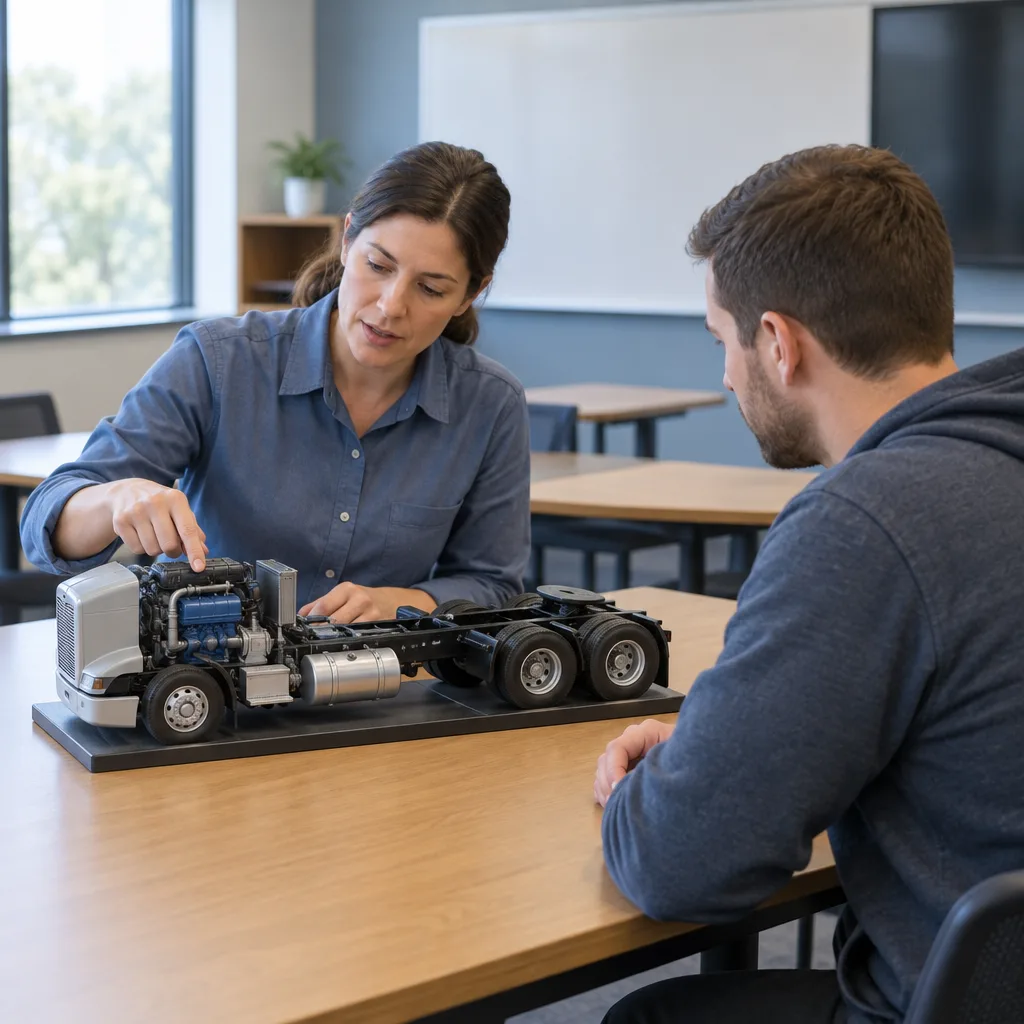
How to interpret company evidence without jumping to conclusions
A record may appear significant at first but have limited meaning without context. A training form might show that a session occurred, but not necessarily what instruction was provided or whether the driver could perform a particular task. Conversely, a missing or incomplete record does not automatically establish that a driver lacked training or that a company caused a collision.
A careful review may compare company materials with other available evidence, such as the crash report, vehicle data, witness accounts, dispatch communications, and the driver’s actions. Investigators may ask whether a concern was known before the crash, whether the company had a relevant policy, and whether it was followed. These questions are different from deciding whether the driver’s conduct caused the collision.
Some evidence can be time-sensitive. While a person is dealing with immediate needs after a crash, it may help to keep available photographs, correspondence, and basic incident information in an organized place. For a wider overview of steps to take after a semi-truck crash in Dallas, readers can review guidance that addresses post-crash considerations beyond company training records. Specific options depend on the circumstances, and an attorney can explain how evidence may be requested or preserved.
Poor hiring, training, or supervision evidence also does not automatically justify punitive damages. Those damages involve a separate, fact-dependent legal question with a higher standard than an ordinary negligence allegation. For more on when a Dallas trucking company may face punitive damages, see the distinction between evidence of a company practice and the additional showing that may be required.
Frequently Asked Questions
Does a truck driver qualification file prove negligent hiring?
No. A qualification file may help show what information a carrier collected or maintained, but its contents—or an apparent gap—do not automatically prove negligent hiring. The file must be considered with other evidence, including what the company knew, the driver’s assigned duties, and how the crash occurred. Applicable federal requirements and the relevance of specific materials depend on the operation and facts.
Can a trucking company be investigated even if the driver caused the crash?
Potentially. A driver’s conduct and a company’s hiring, training, or supervision practices are separate issues, although the evidence may overlap. A company-level claim generally requires a factual and legal basis connecting the alleged practice to the case; the driver’s role does not by itself answer that question. Whether a claim is available depends on the evidence and applicable law.
Are training records always available after a Dallas truck crash?
Not necessarily. Records may be held by different entities, may vary by employer and driver, and may be subject to applicable retention rules. A crash report may not include the carrier’s personnel or training materials. In a Dallas-area case, the way relevant records can be identified and obtained depends on the circumstances and legal process; a lawyer can explain potential options.
Does inadequate training automatically lead to punitive damages?
No. An allegation that training was inadequate is not enough on its own to establish punitive damages. Those damages involve a separate legal standard and a fact-specific assessment; ordinary negligence evidence does not automatically satisfy it. The distinction matters because proof relevant to hiring or training may support one issue without meeting the requirements for a different type of damages claim.
How Husain Law Can Help
Husain Law is dedicated to helping people understand how evidence about a trucking company’s hiring, training, and supervision may relate to a Dallas crash claim. A review may consider the available crash information, what company records could clarify, and how company-level questions differ from allegations about a driver’s conduct. The relevance of any evidence depends on the particular facts and applicable law. If you have questions after a truck collision, contact Husain Law to request a free consultation or case evaluation and discuss your situation.
The information in this article is for educational purposes only and does not constitute legal advice. Contact a qualified attorney authorized to practice in the jurisdiction that applies to your matter for advice specific to your situation.


Leave a Reply
Want to join the discussion?Feel free to contribute!