
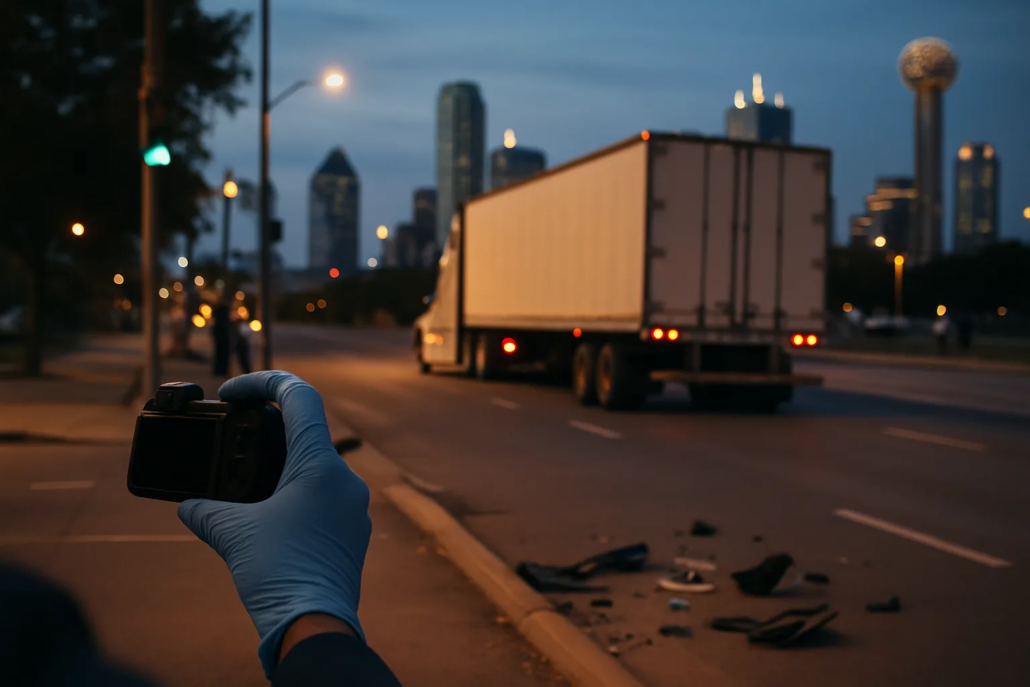
Which Clues Help a Dallas Hit-and-Run Truck Lawyer?
A truck that leaves after a collision can seem impossible to locate, especially when the driver is gone and the vehicle was visible for only a few seconds. However, a partial license plate, trailer color, company markings, broken equipment, or a witness’s memory may provide useful leads. If you are asking, “How can a Dallas hit-and-run truck be identified after the crash?” the answer often begins with preserving small details before they disappear.
A Dallas hit-and-run truck accident lawyer may help organize those details, identify potential evidence sources, and communicate with insurers or businesses that may possess relevant records. Dallas truck accident lawyers can also help evaluate whether the available facts support a claim involving a driver, carrier, or another commercial entity. This guide explains what to record immediately, how investigators may use cameras and route evidence, and what steps can matter after the truck is located.
What Evidence Can Help Identify a Dallas Hit-and-Run Truck?
The first hours and days after a commercial truck leaves a collision may be important. Evidence can be moved, overwritten, damaged, or forgotten. Generally speaking, victims should focus on accurately recording what they know rather than guessing about details they did not observe.
Immediate evidence-preservation checklist
Consider documenting the following information as soon as it is reasonably safe:
- Call 911 or the appropriate law-enforcement agency, report that the truck left the scene, and obtain the incident or report number if available.
- Write down the exact time, roadway, direction of travel, intersection, and nearby landmarks in Dallas, Texas.
- Record every partial plate detail, including state, color, spacing, or uncertain characters. Mark uncertain information as uncertain rather than filling in blanks.
- Describe the tractor and trailer separately, including color, body style, damage, decals, distinctive equipment, unit numbers, or visible company or transportation markings.
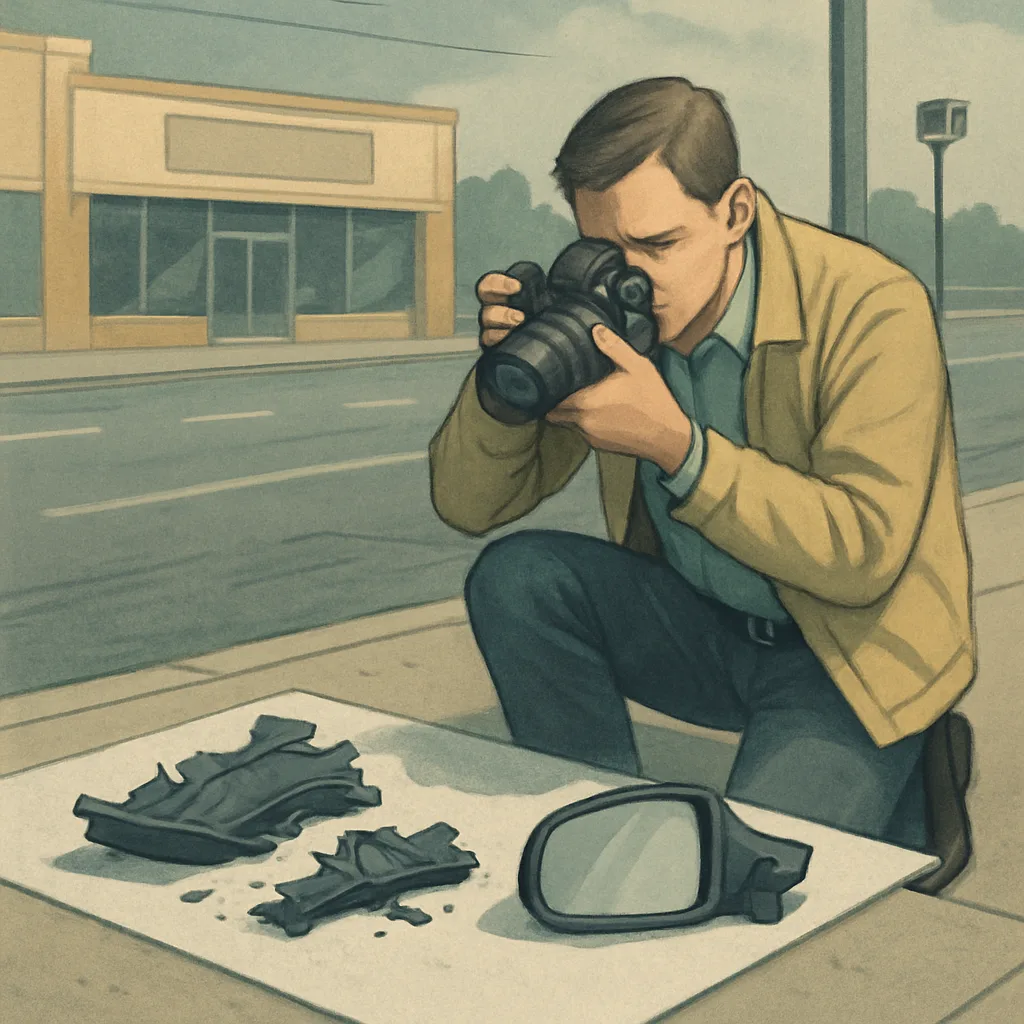
- Photograph vehicle damage, tire marks, scattered cargo, paint transfer, broken lights, mirror pieces, plastic, metal, or other debris from a safe location.
- Obtain names and contact information for witnesses, including passengers, pedestrians, delivery workers, and other drivers.
- Note nearby businesses, gas stations, warehouses, residences, traffic signals, toll facilities, or parking areas that may have exterior cameras.
The first steps after a Dallas semi-truck crash may include safety, medical attention, reporting, scene documentation, and preserving witness information. Video and physical evidence should not be disturbed except as necessary for safety or at the direction of authorities.
How Can Cameras, Witnesses, and Route Records Identify the Truck?
A truck may be unidentified at the crash scene but identifiable when several independent clues are combined. For example, a witness may remember a blue trailer, a camera may show the vehicle turning onto a particular road, and debris may match a damaged side mirror or light assembly. None of these details should be treated as conclusive without verification, but together they may help narrow the search.
Nearby businesses may be especially important. A camera at a loading dock may capture the truck before or after the collision even when the impact itself occurred outside the camera’s view. A business owner or property manager may not know that footage is relevant, and many systems automatically overwrite recordings. A prompt written preservation request, made through appropriate channels, may help avoid accidental deletion. Individuals should avoid trespassing or demanding access; an attorney may help address requests formally.
Using commercial and electronic records
Once a potential carrier or vehicle is identified, records may help establish where it traveled and whether it matches the physical evidence. Depending on the vehicle and company, potentially relevant information can include:
- Electronic control-module or telematics data showing speed, braking, location, or direction;
- Dispatch, delivery, fuel, toll, weigh-station, or GPS records;
- Driver schedules, trip documents, and vehicle assignment records;
- Maintenance records concerning lights, mirrors, tires, or other damaged components; and
- Fleet photographs, unit numbers, trailer records, or inspection documentation.
Electronic truck records that may reveal the vehicle’s actions can supplement, but do not replace, witness statements and physical evidence. Some business and electronic records may be overwritten or routinely purged, so prompt preservation discussions can be important in a Texas truck accident investigation.
What Should Happen After the Commercial Truck Is Located?
Finding a truck is only one part of a potential claim. Investigators and attorneys may need to compare its condition with photographs, debris, witness accounts, video, and the collision report. A vehicle that appears similar is not necessarily the vehicle involved, so documentation and reliable chain-of-custody practices matter.
The identifying information may also reveal more than the driver’s name. A company logo, USDOT number, trailer registration, dispatch record, or maintenance document may point to a motor carrier, employer, broker, shipper, owner, or maintenance provider. Depending on the facts, claims against the trucking company and other responsible businesses may need to be evaluated separately from any claim involving the individual driver.
Insurance information should also be collected carefully. Commercial vehicles may have primary liability coverage and, depending on the circumstances, excess or umbrella policies. The first insurance information provided is not necessarily the only coverage that may require review. Understanding whether multiple insurance policies may cover a Dallas truck crash can be part of evaluating available options, without assuming that any policy will pay a particular amount.
Common mistakes that can weaken the evidence
- Waiting several days before asking nearby businesses about video;
- Posting speculative accusations or unverified plate information online;
- Repairing or discarding damaged vehicle parts before they are documented;
- Speaking with an insurer without preserving a clear account of the collision; and
- Assuming the case is over because the truck was not identified immediately.
In Texas, deadlines and procedures can vary by claim and governmental defendant. Evidence may disappear long before a filing deadline. Reviewing the Texas deadline for filing a Dallas truck accident claim with a licensed attorney may help a reader understand why prompt investigation matters. Texas law can change, so current legal advice should be based on the facts and timing of the individual matter.
Frequently Asked Questions
Can a partial license plate identify a hit-and-run truck in Dallas?
A partial plate may help investigators narrow a search, particularly when combined with the truck’s color, trailer type, company markings, travel direction, time, and nearby camera footage. It is important to report the information accurately and identify uncertain characters as estimates. Law enforcement, insurers, or attorneys may compare the partial plate with commercial vehicle records and other evidence, but a partial plate alone may not conclusively establish the truck’s identity.
What if no one wrote down the truck’s license plate?
A plate is only one possible identifier. Witness descriptions, photographs, paint transfer, broken parts, distinctive trailer features, business surveillance, traffic-camera information, delivery records, and route evidence may still provide leads. Nearby businesses may have captured the vehicle before or after the crash. A prompt investigation may be useful because witnesses’ memories can change and video systems may overwrite recordings.
Can a business refuse to provide truck accident surveillance video in Texas?
A business may have privacy, security, or ownership policies governing access to its recordings. It may also lack footage or have overwritten it. A person should not trespass or pressure employees. An attorney may be able to send a preservation request and pursue appropriate discovery or legal process if a claim is filed. Whether footage can be obtained depends on the circumstances and applicable Texas procedure.
Does identifying the truck mean the claim will succeed?
No. Identifying the vehicle is an important investigative development, but a claim may still require evidence about how the collision occurred, who controlled the vehicle, applicable insurance, damages, and legal responsibility. The truck’s identity does not by itself establish fault or guarantee compensation. A licensed Texas attorney can review the available evidence and explain options specific to the situation.
How Husain Law Can Help
Husain Law is dedicated to helping Dallas truck-crash victims understand the evidence that may matter after a commercial vehicle leaves the scene. The firm can evaluate available photographs, witness details, debris information, business-camera leads, collision reports, and potential carrier records. Depending on the circumstances, the legal team may also help identify parties and insurance issues that require further investigation.
The firm is committed to fighting for clients’ rights while providing clear, practical guidance about the investigation and claim process. Contact Husain Law for a free consultation or case evaluation regarding a Dallas hit-and-run truck collision.
The information in this article is for educational purposes only and does not constitute legal advice. Contact a qualified attorney licensed in Dallas, Texas for advice specific to your situation.


Leave a Reply
Want to join the discussion?Feel free to contribute!