

How Can Cargo Loading Cause a Dallas Truck Accident?
A commercial truck can become difficult to control when cargo shifts, exceeds safe weight limits, or is not secured for the trip. After a rollover, jackknife, sudden lane movement, or lost load, a natural question is whether an improperly loaded truck accident in Dallas involved more than driver conduct. Dallas truck accident lawyers may help examine the trailer, loading records, and parties involved.
Husain Law approaches these cases with attention to the physical and documentary evidence that can explain what happened. This article discusses how cargo problems may contribute to a collision, who may have handled the load, what photographs and scene details can be useful, and why prompt preservation of evidence matters. It is general information for people exploring truck accident law in Dallas, Texas—not a conclusion about any particular crash.
How Can Improperly Loaded Cargo Cause a Dallas Truck Collision?
Cargo affects a truck’s balance, braking, steering, and stability. A load that is too heavy, concentrated on one side, stacked too high, or insufficiently restrained may move when the truck brakes, turns, changes lanes, or travels over an uneven surface. The movement can alter the trailer’s center of gravity and make the vehicle respond differently than expected.
Cargo shifting, overloading, and poor distribution
A cargo shift accident in Texas may involve boxes, equipment, building materials, liquids, or other freight moving inside a trailer. Even when the truck’s total weight appears acceptable, uneven distribution can create stability concerns. An overloaded truck accident claim may also require examining axle weights, loading instructions, weight tickets, and whether the load was placed in a way that affected handling.
A semi truck may jackknife when the tractor and trailer lose alignment. A rollover can occur when a high or shifting load contributes to excessive lateral movement during a turn. Cargo that falls from an open trailer can create a separate hazard for nearby motorists. These possibilities do not establish liability by themselves, but they show why an investigation should not stop at asking whether the driver was speeding or distracted.
Physical signs that may matter
Photographs and observations can help preserve clues, including:
- Cargo scattered near the trailer or roadway;
- Broken straps, chains, seals, pallets, blocking, or bracing;
- Trailer doors, walls, roof, floor, or tie-down points showing unusual damage;
- A visible tilt, uneven load placement, or items piled against one side; and
- Tire marks, debris paths, gouges, or the truck’s final position.
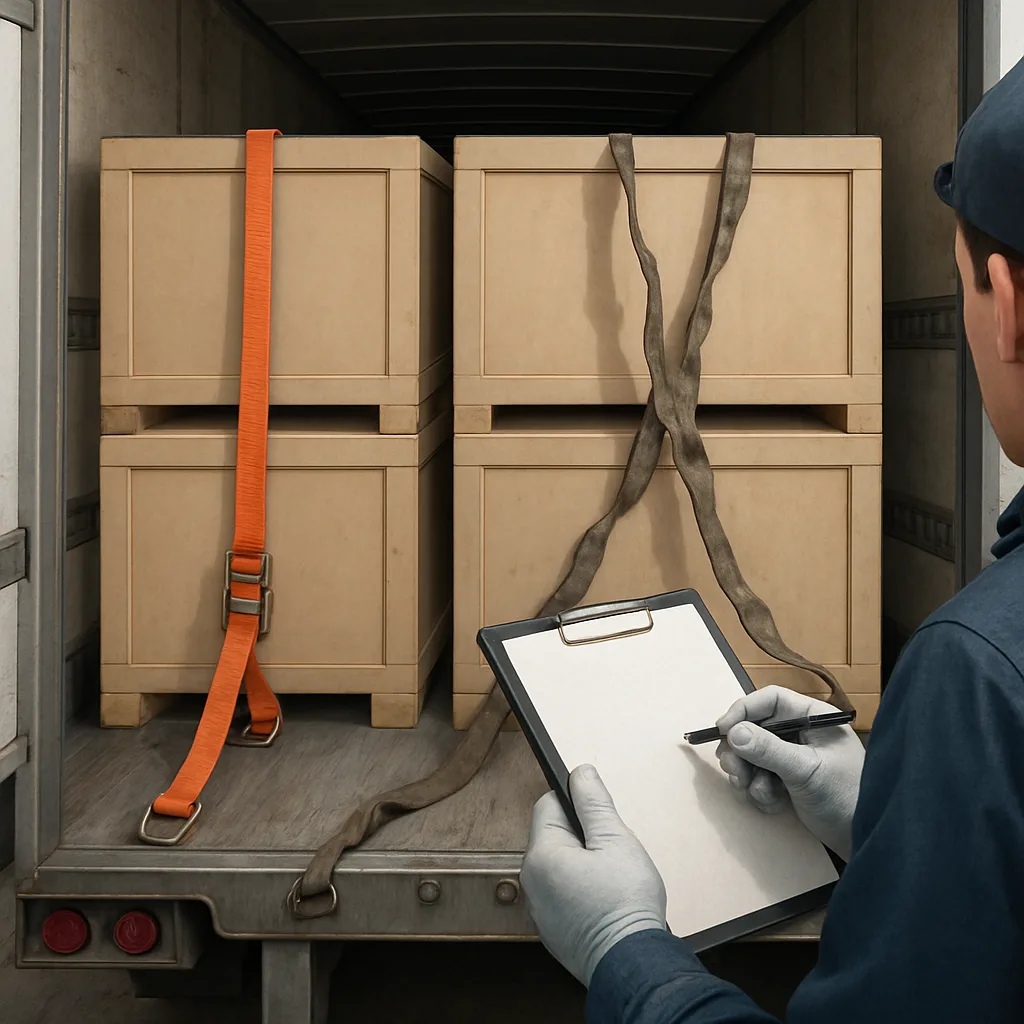
These details should be recorded from a safe location and without entering a damaged trailer or disturbing evidence. In Dallas, Texas, roadway conditions and traffic may cause debris or damaged cargo to be moved quickly, so the earliest available photographs may be particularly useful.
Who May Be Connected to an Improperly Loaded Truck Accident in Dallas?
The person driving the truck is not necessarily the only person connected to how cargo was prepared. Depending on the facts, loading may have involved a motor carrier, shipper, warehouse, freight broker, loading contractor, trailer owner, or another business. The relevant question is often who selected, packed, weighed, inspected, secured, or accepted the freight—and what each party knew or should have known.
Potential evidence may include:
- Bills of lading, shipping instructions, weight tickets, and loading photographs;
- Warehouse or dock records showing when and by whom the cargo was handled;
- Inspection, maintenance, and repair records for the trailer and tie-down equipment;
- Driver vehicle inspection reports and electronic data related to the trip; and
- Statements from witnesses, first responders, dispatch personnel, or loading staff.
Federal commercial motor carrier safety requirements may apply to the transportation and securement of freight, while Texas law governs many questions involving a collision and injury claim in Dallas County. The precise rules and legal theories depend on the cargo, vehicle, parties, and location. Laws and procedures can vary by jurisdiction and may change over time, so a licensed Texas attorney should evaluate the specific facts.
Insurance analysis can also be more complicated when several entities had different roles. Identifying the party connected to the loading process may affect which policies and records warrant review. Readers exploring additional insurance coverage after a Dallas truck crash can learn more about why a commercial collision may involve more than one policy.
What Evidence and Steps Matter After a Suspected Cargo-Shift Crash?
A Dallas truck accident investigation may begin with the scene, but it often extends to records that are not available to an injured person without formal requests or legal process. A prompt inquiry can help identify whether the cargo was shifted, unsecured, overloaded, or distributed improperly before the trailer is repaired and electronic or business records are overwritten.
If it is safe and practical, people at the scene may want to preserve information such as:
- Wide and close photographs of the truck, trailer, cargo, roadway, debris, and visible damage;
- The truck’s company markings, license plate, trailer number, and direction of travel;
- The location, time, weather, traffic conditions, lane configuration, and nearby cameras;
- Names and contact information for witnesses; and
- Copies or reference numbers for the police report, medical records, and insurance communications.
Do not climb into a trailer, handle fallen freight, argue with a driver, or attempt to inspect equipment in an unsafe area. It can also be difficult to determine the cause from photographs alone. A qualified investigator may need to compare the damage pattern with the trailer design, load plan, restraint equipment, road surface, vehicle data, and witness accounts.
Evidence should be preserved while also keeping deadlines in mind. The Dallas truck accident filing deadline may affect how long an injured person has to pursue a Texas claim, but the applicable period can depend on the parties and circumstances. Seeking information promptly does not guarantee a legal result; it may simply make it easier to evaluate what evidence exists.
Frequently Asked Questions
Can a cargo shift cause a semi truck to leave its lane?
Yes, shifting or uneven cargo can change a trailer’s balance and handling, particularly during braking, turning, or a sudden lane change. However, lane departure can have many causes, including road conditions, mechanical problems, driver actions, or other vehicles. Establishing a connection generally requires examining the load, trailer damage, roadway evidence, and available records rather than relying on the appearance of the crash alone.
What should I photograph after an unsecured load semi truck crash?
When it is safe, useful photographs may show the overall scene, trailer position, fallen or displaced cargo, broken restraints, trailer doors and walls, debris paths, tire marks, road conditions, and visible vehicle damage. Photographs should be taken from safe areas without entering a damaged trailer or moving freight. Witness information, the location, time, and police report details may also help preserve the circumstances.
Can a shipper be involved in an overloaded truck accident claim?
Possibly. The answer depends on who selected, packed, weighed, loaded, secured, or accepted the freight and what the available evidence shows. A motor carrier, shipper, warehouse, loading contractor, or trailer owner may have different roles. Texas liability rules are fact-specific, and identifying a potentially involved party does not by itself prove legal responsibility.
Does a truck’s black-box data show whether cargo shifted?
Electronic vehicle data may provide information about speed, braking, acceleration, or other driving events, depending on the equipment and available records. It usually does not directly show how cargo was packed or restrained. Investigators may need to compare electronic data with photographs, trailer damage, loading documents, inspection records, and witness accounts to assess whether cargo movement contributed to the collision.
How Husain Law Can Help
Husain Law is dedicated to helping people understand the evidence and legal issues that may follow a Dallas truck collision. The firm is committed to fighting for clients’ rights while evaluating the trailer, cargo placement, loading records, commercial insurance, and other facts that may be relevant. The team is ready to evaluate your situation and discuss what information may help clarify the cause of the crash.
If photographs, debris patterns, trailer damage, or witness accounts suggest that cargo movement contributed to the collision, you can request a Dallas truck accident case review. Contact Husain Law for a free consultation or case evaluation.
The information in this article is for educational purposes only and does not constitute legal advice. Contact a qualified attorney licensed in Dallas, Texas for advice specific to your situation.

